
01
Metal fabrications
Two-side formed joints made to a drawing and process plan.
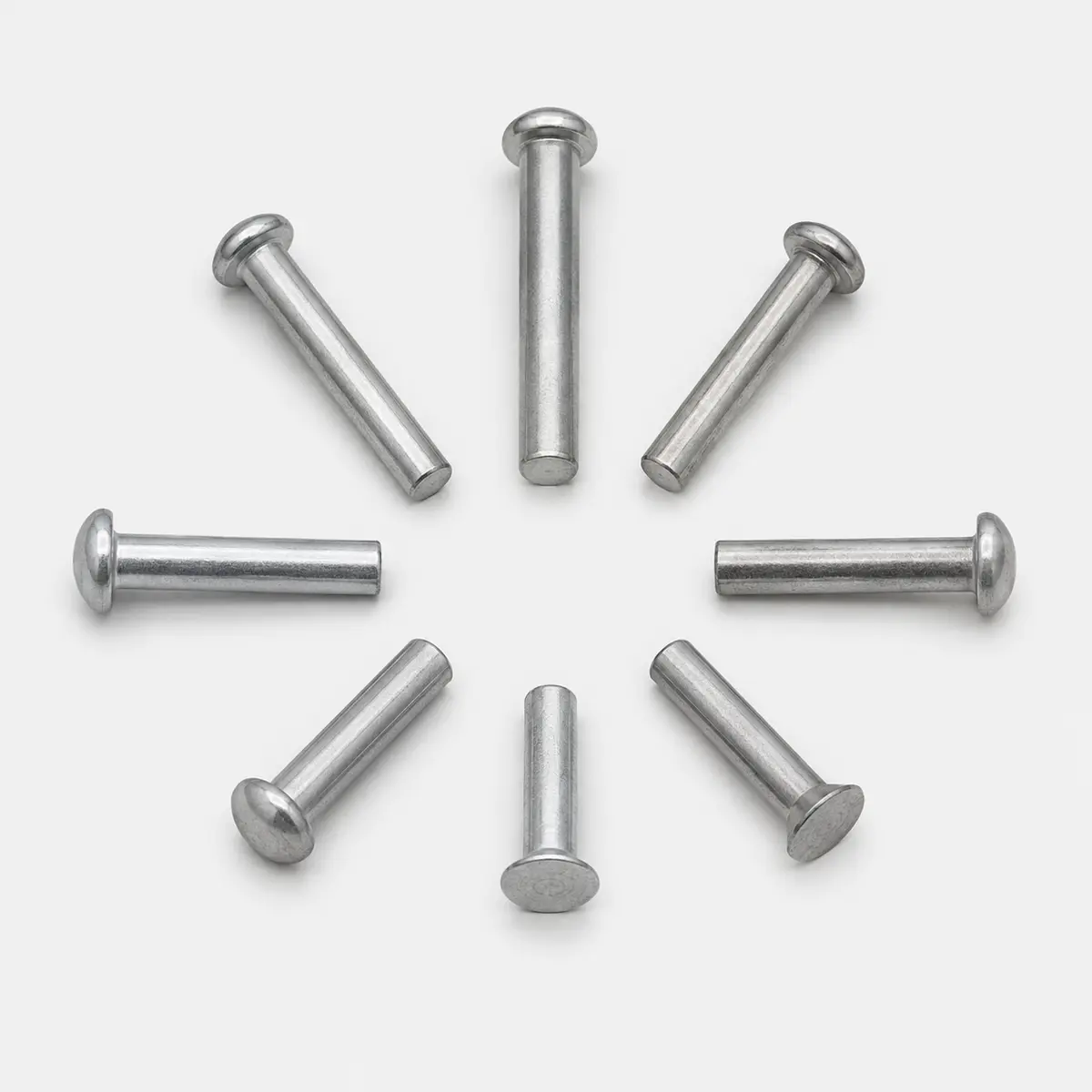
Two-side formed fastening
Solid rivets coordinated by governing standard or drawing, shank diameter and length basis, head form, material and condition, hole and joint stack, tail allowance, forming method, tooling and inspection requirement.
Catalogue ranges are RFQ guidance. Final compliance and joint suitability are controlled by the buyer-approved specification, drawing, installation process and purchase order.
Quotation control
The exact product basis, joint stack-up, dimensions, materials, installation method, quantity and destination are confirmed before sourcing.
| Field | Product information | Order control |
|---|---|---|
| Requested product | Solid-shank rivet with the specified head, material and forming requirement | Confirmed per RFQ |
| Standard / product basis | Purchased standard and edition or released drawing; dimensions not inferred from trade name | Confirmed per RFQ |
| Geometry | Shank diameter, under-head or overall length basis, head form, radius and tail allowance | Confirmed per RFQ |
| Material / finish | Specified steel, stainless, aluminum, copper or other alloy and condition | Confirmed per RFQ |
| Joint / installation | Joint stack, hole preparation, two-side access, forming method and die geometry | Confirmed per RFQ |
| Inspection / records | Material documents, dimensional report and installation/formed-head inspection as ordered | Confirmed per RFQ |
Product overview
A solid rivet requires its tail to be formed after insertion, normally with access and support at both sides of the assembly. The starting rivet, hole, stack-up, tail allowance, support and forming tool act together.
Material condition and installation energy influence the formed head and surrounding parts. XHT quotes to the exact standard or drawing and does not infer a safe substitution from diameter and length alone.
Common ordering fields
Common solid-rivet enquiry fields. The released drawing, material condition and approved forming process control the final supply.
| Selection | Common enquiry options | Control |
|---|---|---|
| Standard / drawing | Exact number and edition, drawing revision or approved sample | Confirmed per RFQ |
| Diameter / length | Shank diameter, length basis, stack thickness and tail allowance | Confirmed per RFQ |
| Head form | Round, universal, flat, countersunk or drawing-defined profile | Confirmed per RFQ |
| Material / condition | Alloy, grade, temper or hardness plus finish | Confirmed per RFQ |
| Hole / forming | Hole tolerance, support, tool/die and formed-head acceptance | Confirmed per RFQ |
| Inspection / packing | Dimensions, material records, sample set and lot separation | Confirmed per RFQ |
Custom supply: Non-standard size, material, head, finish, marking, inspection and packing can be reviewed against a released drawing, approved sample or complete specification.
Technical control
Rivet dimensions alone do not define the completed connection. The buyer controls hole preparation, stack-up, forming method, tool geometry, inspection of the upset head and final joint approval.
Applications & supply
Application examples guide the RFQ. Suitability must be verified for the actual joint, service environment and installation process.
Two-side formed joints made to a drawing and process plan.
Material condition and tooling matched to the surrounding parts.
Head, hole, setting and inspection controlled by the application owner.
Non-standard geometry reviewed against drawing or approved sample.
Quality & order coordination
Inspection, certificates, traceability and packing are supplied only when agreed in the quotation and order.
Product basis, joint stack-up and critical fields are recorded.
Cluster suppliers are compared against the confirmed requirement.
Dimensions, materials, finish and test records follow the agreed plan.
Labels, lot separation and shipment details are coordinated.
Related products
General blind-rivet option for one-sided access and a controlled grip range.
Product RFQ
Send a specification, drawing, BOM, approved sample or product list. Mark every dimension, material, performance, inspection and document field that must not be substituted.
Choose whether we may use optional analytics. Necessary technologies remain available so the website, forms and security features can work.
Learn more in our Privacy Policy.